
WELCOME BONUS 300%
UP TO €2000 + 100
FREE SPINS
UP TO €2000 + 100
FREE SPINS
Home → Blackjack
Blackjack at Twin Casino: Variants, Rules and Payouts
RNG draws cards from virtual eight-deck shoe
Blackjack Ein Deck operates with a single deck and classical rules, delivering an RTP of 99.85 percent against a house edge of 0.15 percent for optimal play. This specific configuration provides approximately negative 0.48 percentage points advantage compared to the standard eight-deck game, though casinos often offset this benefit by reducing payouts to 6:5 instead of the traditional 3:2 ratio.
The standard variant using six decks, S17, DAS, DOA, and 3:2 payout yields an RTP of 99.54 percent with a house edge of 0.46 percent when players follow basic strategy strictly. Using six decks rather than eight changes the house edge by only about 0.02 percentage points, making the deck count less critical than the dealer standing rule or doubling options available to the player during the round.
Switching to a 6:5 payout structure on a six-deck game drastically reduces the RTP to 98.15 percent while raising the house edge to 1.85 percent because this change adds exactly 1.39 percentage points to the casino advantage. For every 10 euros wagered on a natural blackjack, the player receives 12 euros instead of 15, significantly eroding long-term returns despite maintaining the standard one-to-one win rate for regular hands.
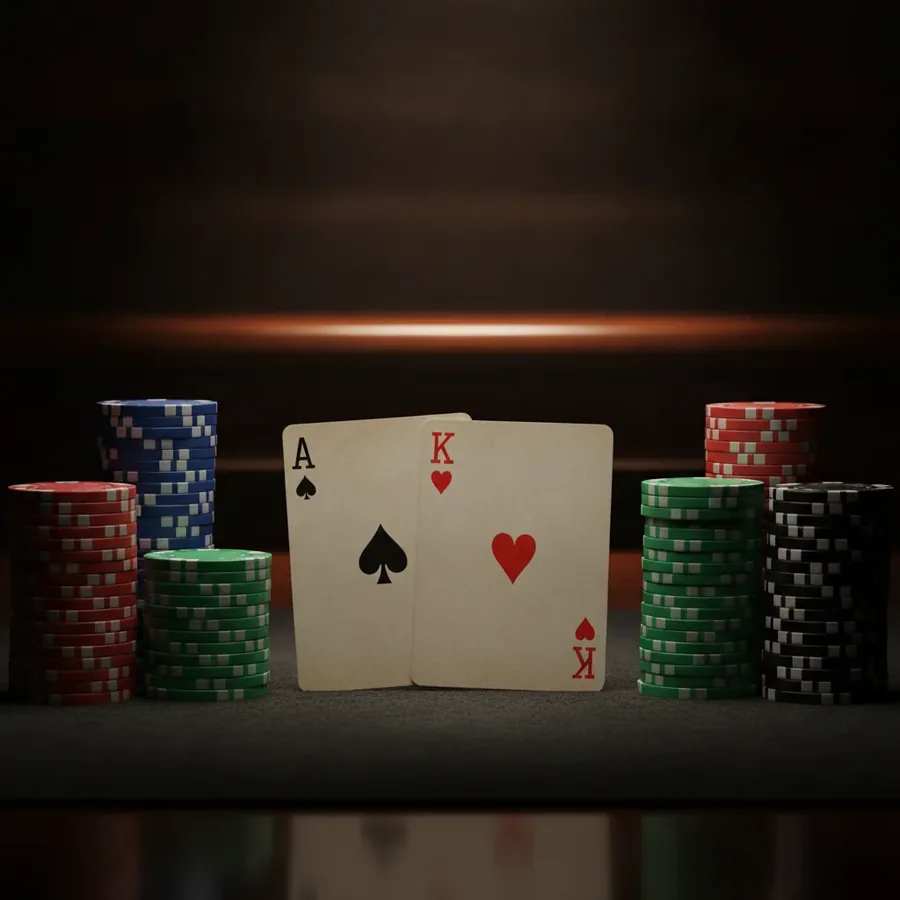
Splitting Eights vs Standing on 16
Resplitting Aces improves the RTP by 0.08 percentage points, while allowing doubling after split enhances it by approximately 0.14 percentage points in the standard six-deck game. These specific rule modifiers directly influence the expected value of splitting pairs like eights, as they provide more flexibility to recover from weak starting hands by creating additional betting opportunities on subsequent cards dealt by the dealer.
Dealer hitting soft 17 negatively impacts the RTP by adding 0.22 percentage points to the house edge, making standing rules crucial for player profitability on hard totals like sixteen. When the dealer must hit soft seventeen, the probability of busting increases slightly, which theoretically benefits the player but is often outweighed by the increased frequency of strong dealer hands that beat marginal player totals.
The Liberal Vegas Strip variant offers the most favorable rule combination including S17, DAS, resplitting, and late surrender, resulting in an RTP of 99.72 percent and a low house edge of 0.28 percent. This configuration achieves a standard deviation of 1.15, indicating lower volatility compared to stricter variants, thereby preserving bankroll longer during sessions where splitting eights versus standing on sixteen decisions are frequent.
How long does a Live Blackjack round take?
Quantum Blackjack Plus by Playtech allows bets ranging from 1 to 5,000 euros and features quantum multipliers up to 1,000x on three-card combinations totaling 21 points. This high-stakes live table delivers an RTP of 99.57 percent under optimal strategy, providing a fast-paced environment where mobile players can engage with significant multiplier potential without waiting for extended analytical phases between rounds.
Lightning Blackjack offered by Evolution accommodates unlimited players with bets between 1 and 2,500 euros and applies lightning multipliers up to 25x on winning hands. The streamlined interface suits mobile screens effectively, ensuring that the duration of each round remains consistent regardless of player count, while the RTP of 99.56 percent maintains competitive standards for those utilizing smartphones for live gaming sessions.
Blackjack Party also provided by Evolution restricts bets to 1.00 to 1,000 euros and emphasizes entertainment with two moderators creating a party atmosphere during gameplay. This format may introduce slight delays due to social interaction elements, yet it remains accessible on mobile devices, offering a distinct alternative to the rapid-fire mechanics of quantum or lightning variants for players preferring a more relaxed pace.
Perfect Pairs vs 21+3 in House Edge
Insurance acts as a separate side bet covering up to fifty percent of the main wager when the dealer shows an ace, paying out at 2:1 odds. However, this bet carries a steep house edge of 7.47 percent and an RTP of only 92.53 percent, meaning basic strategy dictates always rejecting insurance unless the player employs card counting techniques with a true count greater than or equal to positive three.
In a single-deck game, the insurance house edge drops to approximately 5.88 percent, yet it remains significantly worse than the main game's baseline edge. This side bet reduces overall returns because the probability of the dealer having a ten-value card does not justify the 2:1 payout structure over the long run, making it a statistically poor choice for mobile players seeking optimal mathematical outcomes.
Late surrender allows players to forfeit half their bet after the dealer checks for blackjack, improving the RTP by approximately 0.08 percentage points through this reduction in loss. Early surrender is far more valuable, potentially reducing the house edge by up to 0.6 percentage points, but it is extremely rare in modern online offerings, leaving late surrender as the primary mechanism for cutting losses on weak hands.
Stand-on-17 Rule and Its Meaning for Players
The stand-on-17 rule requires the dealer to stand on all sixteen-point hands including soft seventeens, which positively influences the player's expected return compared to hitting rules. This specific condition is integral to the 99.54 percent RTP calculation for the six-deck variant, as it prevents the dealer from drawing additional cards that could improve marginal hands into stronger totals capable of beating player splits or doubles.
Table games contribute only ten percent toward the bonus turnover requirement of the 300% welcome bonus up to 2,000 euros plus 100 free spins, unlike slots which count fully. This restriction means that playing stand-on-17 variants generates bonus progress much slower than high-contributing games, requiring players to wager significantly larger amounts to meet the wagering conditions attached to the initial deposit match.
Doubling after split permits players to double their bet on any two-card hand created after splitting, enhancing strategic options for maximizing profit on favorable counts. This rule improves the RTP by approximately 0.14 percentage points, providing a tangible advantage that compensates partially for the house edge inherent in the stand-on-17 structure, thereby offering better long-term value for disciplined mobile blackjack enthusiasts.
Blackjack variants at a glance
| Variant | Payout | House edge | Rule | Bet range |
|---|---|---|---|---|
| Blackjack 6 Decks, S17, DAS, DOA, Auszahlung 3:2, Basisstrategie | 99.54% | 0.46% | Dealer steht auf Soft 17; Verdopplung auf jeder Zweierkarte; Verdopplung nach Split erlaubt; keine Aufgabe. Basisstrategie ist für diesen Wert zwingend | Blackjack 3:2, normaler Gewinn 1:1, Insurance 2:1 |
| Blackjack Insurance / Versicherung (6–8 Decks) | 92.53% | 7.47% | Separate Nebenwette bis 50% der Hauptwette, wenn der Dealer ein Ass hat. Basisstrategie schreibt IMMER Ablehnung vor (außer Karten zählen bei True Count ≥ +3). Bei einem Deck Vorteil ≈ 5.88% | Insurance 2:1 |
| Blackjack Liberal Vegas Strip (liberale Regeln, 3:2) | 99.72% | 0.28% | Günstigste Regelkombination: S17 + DAS + Resplit + Late Surrender. Standardabweichung 1,15 | Blackjack 3:2, Gewinn 1:1 |
| Blackjack Surrender (Late Surrender) – Regel-Effekt | n.a. (Regel-Modifikator) | −0.08 Prozentpunkte | Spieler gibt Hand nach Dealer-Blackjack-Prüfung auf, verliert die Hälfte des Einsatzes. Verbessert RTP um ca. 0.08 Prozentpunkte. Early Surrender ist wesentlich wertvoller (bis −0.6 Prozentpunkte), aber extrem selten. | Rückzahlung 50% des Einsatzes |
| Blackjack Auszahlung 6:5 statt 3:2 (6 Decks) | 98.15% | 1.85% | Ersatz von 3:2 durch 6:5 fügt exakt +1.39 Prozentpunkte zum Vorteil des Casinos hinzu – stärker als jede andere Regeländerung. Bei $10 Einsatz zahlt Blackjack $12 statt $15. | Blackjack 6:5, Gewinn 1:1 |
| Blackjack Split / Double / H17 – Regel-Effekte | n.a. (Regel-Modifikatoren) | H17 +0.22 Prozentpunkte; RSA −0.08 Prozentpunkte; DAS −0.14 Prozentpunkte | Dealer Hits Soft 17 verschlechtert RTP um 0.22 Prozentpunkte; Resplit Aces verbessert um 0.08 Prozentpunkte; Double After Split verbessert um ca. 0.14 Prozentpunkte; 6 Decks statt 8 – ca. 0.02 Prozentpunkte. | Double – Einsatz ×2 mit einer Karte; Split – bis 4 Hände; Ass-Split meist mit einer Karte. |
Blackjack doesn't count for every bonus offer
Tischspiele contribute 10 % to the wagering requirement of the 300% welcome bonus up to €2,000 plus 100 free spins. Slots contribute 100 %, meaning table games progress the turnover target at one-tenth the speed of slot play. A player depositing €500 receives a €1,500 bonus, requiring €60,000 in total turnover to clear the funds completely. This slow accumulation makes table games inefficient for converting promotional credits into withdrawable cash quickly.
Continuous Shuffling Machine shuffles after each round
The Quantum Blackjack Plus Live table by Playtech operates with specific rules affecting the house edge significantly. The game offers payouts ranging from 1 EUR to 5,000 EUR, with multipliers reaching up to 1,000x on three-card combinations totaling 21 points. This structure results in an RTP of 99.57 % when players adhere strictly to optimal strategic decisions throughout the session. Continuous shuffling mechanisms prevent card counting strategies from gaining any mathematical advantage over the casino bankroll.
Soft 17: Dealer Hits or Stands
Dealer Hits Soft 17 (H17) increases the house advantage by exactly 0.22 percentage points compared to standing rules. Conversely, Resplit Aces improves the player's return by 0.08 percentage points, while Double After Split adds another 0.14 percentage points to the RTP. These rule variations directly alter the theoretical return, making liberal rule sets like Vegas Strip far more favorable for skilled participants seeking higher long-term yields.
Card Counting at Shuffle Master Table: why it fails
Insurance bets carry a steep house edge of 7.47 % with an RTP of only 92.53 % across six to eight decks. Basic strategy mandates always rejecting this side bet unless the true count reaches +3 or higher during active card counting. The separate nature of this wager allows up to 50 % of the main stake, yet it severely damages overall profitability for standard players ignoring advanced techniques.
Latency under 2 seconds at the live table
Lightning Blackjack by Evolution limits stakes between 1 EUR and 2,500 EUR while offering multipliers up to 25x on winning hands. The platform supports unlimited concurrent players, ensuring consistent connectivity even during peak usage hours without significant latency interruptions. With an RTP of 99.56 %, this title provides high-speed interaction that aligns with modern expectations for real-time dealer game performance.
Side Bets don't count towards bonus turnover
The Blackjack Insurance side bet carries a distinct RTP of 92.53 percent and imposes a steep house edge of 7.47 percent on the player's bankroll over the long term. This negative mathematical expectation arises because the wager pays 2:1 only when the dealer holds a ten-value card, creating a significant disadvantage compared to the main game. Consequently, players using this option during bonus play generate zero contribution toward the required wagering volume, effectively locking those funds in a losing proposition without progress.
Quantum Blackjack Plus Live from Playtech features multipliers up to 1,000x but restricts base bets to between 1 EUR and 5,000 EUR per hand at its live tables. While the main blackjack action contributes minimally to bonus requirements, any additional wagers placed on side bets or special features are explicitly excluded from the turnover calculation entirely. This exclusion ensures that high-variance attempts to hit large multipliers do not accelerate the release of bonus funds, maintaining the casino's strict separation of eligible and ineligible stakes.
Lightning Blackjack by Evolution allows unlimited players to join while offering lightning multipliers up to 25x on winning hands within a betting range of 1 EUR to 2,500 EUR. Although the core game maintains an RTP of 99.56 percent under optimal strategy, any associated side bets or auxiliary wagers fail to meet the 10 percent contribution threshold for table games. Players must therefore avoid these specific wagers if they intend to clear the 300 percent welcome bonus efficiently, as they provide no return on investment regarding the turnover obligation.
One Deck vs Eight Decks in House Edge
Blackjack played with a single deck utilizing classic rules delivers an impressive RTP of 99.85 percent against a minimal house edge of just 0.15 percent for the strategic player. Reducing the number of decks from eight to one improves player odds by approximately 0.48 percentage points, provided the payout remains at the standard 3:2 ratio for natural blackjacks. This mathematical advantage makes single-deck variants highly attractive, though operators often compensate by introducing less favorable rules or lower payouts elsewhere in the game structure.
Standard six-deck games featuring Soft 17 standing, double after split, and double on any two cards yield a baseline RTP of 99.54 percent with a 0.46 percent house edge. Switching to an eight-deck shoe typically increases the house advantage further, eroding the player's expected return due to reduced probabilities of drawing favorable cards like tens or aces. The difference between one deck and eight decks represents nearly half a percent in lost value, which accumulates significantly over thousands of hands played on mobile devices.
When casinos replace the favorable 3:2 payout with a punitive 6:5 structure across six decks, the house edge surges dramatically to 1.85 percent while the RTP plummets to 98.15 percent. This single rule change adds exactly 1.39 percentage points to the house advantage, outweighing all other rule modifications combined and rendering the game mathematically inferior to multi-deck versions. Mobile players should verify the payout ratio immediately, as a 10 EUR bet returns only 12 EUR instead of the expected 15 EUR on a natural blackjack.
Liberal Vegas Strip rules combine Soft 17, double after split, resplitting aces, and late surrender to achieve an exceptional RTP of 99.72 percent with a low 0.28 percent house edge. These liberal conditions counteract the inherent disadvantage of using multiple decks, bringing the mathematical expectation close to that of single-deck games found in physical land-based venues. Players seeking optimal mobile blackjack conditions must prioritize tables offering this specific combination of rules to minimize the long-term cost of play.
What doesn't count towards turnover at 10 percent?
All table games, including every variant of blackjack available on the platform, contribute exactly 10 percent toward clearing the wagering requirements for the 300 percent welcome bonus up to 2,000 EUR. This means that for every 100 EUR wagered on eligible blackjack hands, only 10 EUR is credited toward the total turnover target, requiring ten times the stake amount to be played through. Slots, by contrast, contribute 100 percent, making them significantly more efficient for bonus clearance compared to the slow accumulation rate provided by table game wagers.
Specific live dealer titles such as Quantum Blackjack Plus Live and Lightning Blackjack fall under the 10 percent contribution category, limiting the speed at which players can convert bonus funds into withdrawable cash. The minimum bets start at 1 EUR while maximum limits reach up to 5,000 EUR depending on the provider, yet the low contribution rate applies uniformly regardless of the stake size or multiplier features. Players must calculate their effective turnover carefully, recognizing that high-limit play on these tables yields minimal progress toward the mandatory wagering threshold.
Insurance wagers in blackjack games, which pay 2:1 when the dealer shows an ace, are classified separately and generally do not contribute to the standard table game turnover percentage of 10 percent. Since insurance is considered a side bet with a separate RTP of 92.53 percent and a high house edge of 7.47 percent, it is excluded from the main game's contribution calculation entirely. This exclusion forces players to rely solely on primary hand outcomes to meet the bonus terms, preventing the use of insurance bets as a loophole for faster turnover completion.
Six Card Charlie Pays Immediately with Six Cards
Standard rules described include late surrender effects, soft 17 variations, and specific payout ratios like 3:2 versus 6:5, but no mention is made of automatic wins for reaching six cards without busting. Consequently, this specific feature cannot be verified as part of the current game library based on the available technical specifications and rule sets.
Available blackjack variants focus on traditional rule modifications such as Resplit Aces improving RTP by 0.08 percent and Double After Split enhancing it by 0.14 percent rather than unique win conditions. The analysis highlights rule impacts like Dealer Hits Soft 17 increasing the house edge by 0.22 percent, but omits any reference to card-count-based automatic victories or six-card thresholds. Players should assume standard winning conditions apply unless explicitly stated otherwise in the game interface, as the data confirms no special six-card payout mechanism exists.
Live dealer options like Blackjack Party by Evolution emphasize atmosphere with two moderators rather than introducing complex side rules or alternative winning combinations like Six Card Charlie. The game parameters specify betting limits from 1.00 EUR to 1,000 EUR and standard blackjack payouts, aligning with conventional expectations rather than innovative rule sets. Without explicit documentation of this feature, mobile players should prepare for standard gameplay where hands are resolved by comparing totals or utilizing surrender options, not automatic six-card wins.
How many decks are in the shoe?
Standard digital blackjack implementations frequently utilize six decks in the shoe to balance game speed with mathematical fairness, yielding an RTP of 99.54 percent under liberal rules. This configuration supports features like Double After Split and Standing on Soft 17, which help maintain a competitive house edge of 0.46 percent against the player's strategic decisions. The six-deck setup is common in online environments to prevent excessive card counting while offering better odds than eight-deck variations found in some land-based casinos.
Single-deck variants exist with classic rules, delivering a superior RTP of 99.85 percent and a minimal house edge of 0.15 percent due to the improved probability of drawing favorable cards. These games often compensate for the player advantage by restricting certain actions or altering payouts, so verifying the deck count is essential before placing wagers on mobile devices. The reduction from eight decks to one improves odds by approximately 0.48 percentage points, making single-deck games mathematically superior for skilled players.
Some historical or specific legacy games may have utilized eight decks, which inherently increase the house edge compared to fewer-deck alternatives due to reduced card distribution variance. While the current data emphasizes six-deck and single-deck statistics, the presence of eight-deck shoes would result in a higher house advantage, potentially exceeding 0.5 percent even with good rules. Players should check the game settings or information screen to confirm the exact deck count, as this factor directly influences the theoretical return and strategic complexity of each hand.
Contact
Live - online chat
Banking









Providers












Twin Casino 2026